 Strength Well


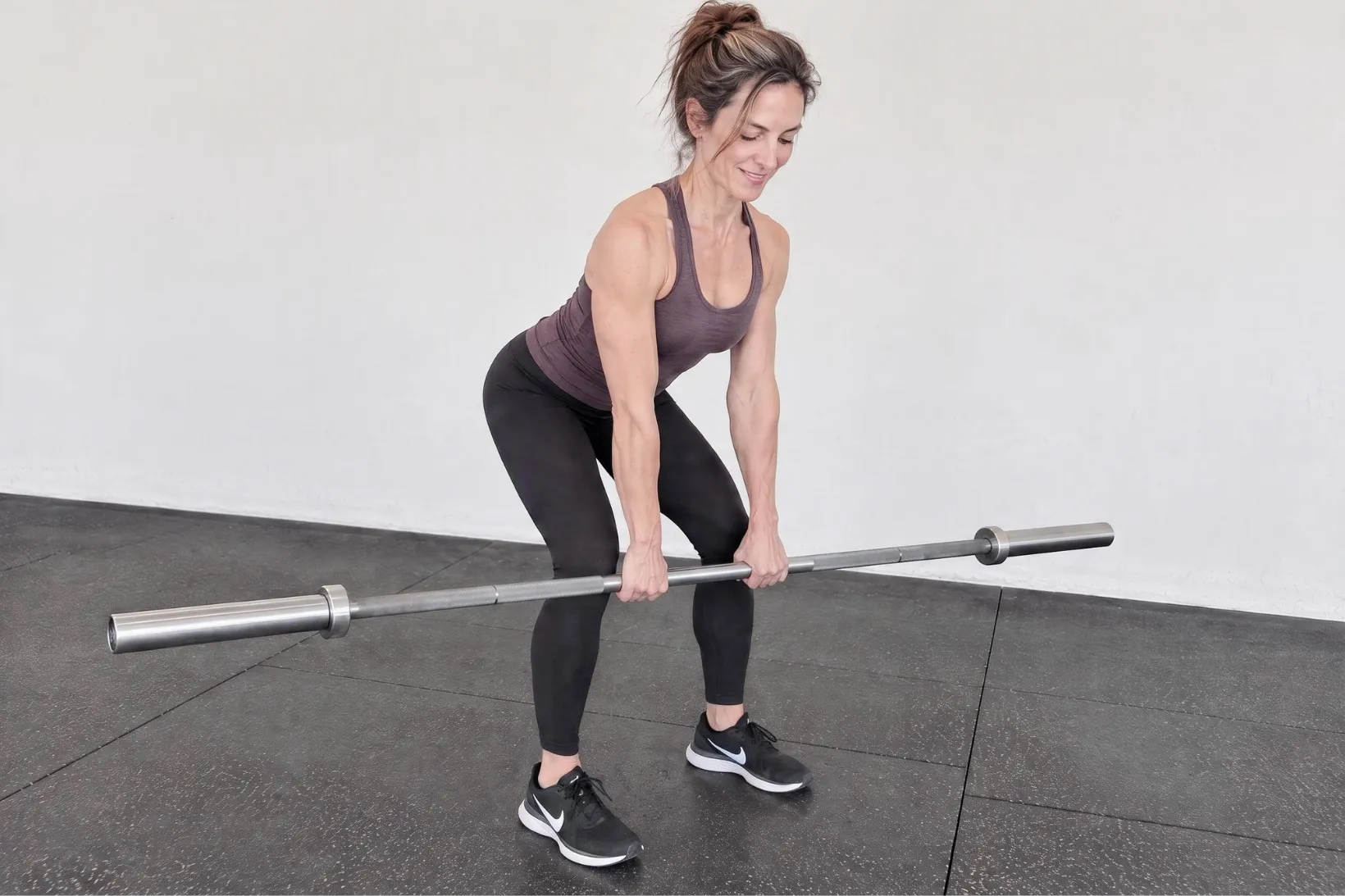
You looked up deadlift standards, saw the numbers, and quietly closed the tab. I get it. Some of those charts make a perfectly strong woman feel like she's barely started.
Here's the thing... you're probably not weak, you're just looking at the wrong chart. Below are realistic deadlift standards for women by age, set by your bodyweight, plus a free printable PDF, how to train for them, and what to do if the deadlift isn't for you.
Realistic deadlift standards for women by age
I keep it to three levels, because that's all anyone really needs:
- Beginner: you can deadlift with good form and you're working up to about half your bodyweight.
- Intermediate: you can deadlift around your own bodyweight. For most women, that's genuinely strong.
- Advanced: you can deadlift around one and a half times your bodyweight. This usually takes years of steady training.
These are one-rep maxes: the most you could lift once with good form. You don't need to test that, and I'll show you why further down.
Here's how the levels look by age, as a multiple of your bodyweight:
| Age | Beginner | Intermediate | Advanced |
|---|---|---|---|
| 40s | 0.5 × bodyweight | 1.0 × bodyweight | 1.5 × bodyweight |
| 50s | 0.45 × bodyweight | 0.9 × bodyweight | 1.35 × bodyweight |
| 60s | 0.4 × bodyweight | 0.8 × bodyweight | 1.2 × bodyweight |
| 70s+ | 0.35 × bodyweight | 0.7 × bodyweight | 1.05 × bodyweight |
And here's the intermediate level in pounds, the number most women actually want:
| Bodyweight | 40s | 50s | 60s | 70s+ |
|---|---|---|---|---|
| 120 lb (54 kg) | 120 lb (54 kg) | 110 lb (50 kg) | 95 lb (43 kg) | 85 lb (39 kg) |
| 140 lb (64 kg) | 140 lb (64 kg) | 125 lb (57 kg) | 110 lb (50 kg) | 100 lb (45 kg) |
| 160 lb (73 kg) | 160 lb (73 kg) | 145 lb (66 kg) | 130 lb (59 kg) | 110 lb (50 kg) |
| 180 lb (82 kg) or more | 180 lb (82 kg) | 160 lb (73 kg) | 145 lb (66 kg) | 125 lb (57 kg) |
The full chart, with beginner and advanced numbers for every age and bodyweight, is in the printable.
One honest note: these are my coaching benchmarks, not research norms. Nobody tests the deadlift in big population studies, so there's no official "normal" to quote. I'd rather tell you that than dress it up.
Why the gentle step down each decade? In the general population, strength drops by roughly 1.5 to 5% a year after 50. Training slows that down a lot, so I ease each level by about 10% per decade rather than more.
Why bodyweight matters more than age
Your bodyweight shapes your deadlift more than your birthday does.
Heavier women usually lift more pounds in total, but less per pound of bodyweight. You can see it in Strength Level's own bodyweight table: their middle level is about 1.5 times bodyweight for a 120 lb woman, but only about 1.2 times for a 200 lb woman. That's not effort. That's just how strength scales with size.
So if you weigh more than 180 lb (82 kg), use 180 lb as your bodyweight in the tables. It keeps the targets fair.
Height and build matter too:
- Tall women move the bar further from floor to standing, so every rep is more work.
- Long legs and a short torso mean leaning further forward, which loads the lower back more.
- A long torso may suit a wider-stance (sumo) deadlift or a trap bar better. One small study found people with longer torsos, relative to their height, lifted relatively more with a sumo stance. Early evidence, but it matches what I see.
I'm tall with long legs, and the conventional deadlift has never felt natural to me. The trap bar suits me much better (more on that later).
Worked example
Say you're 56 and weigh 150 lb. Your intermediate target is 150 × 0.9, so about 135 lb (61 kg). Your beginner milestone is about 70 lb (32 kg).
If you're there already, great. If not, that's your next goal.
Why most deadlift charts online look so heavy
The most quoted source, Strength Level, builds its charts from lifts people type into its calculator and training log. Its own FAQ says these users are probably stronger than the general public.
Its five levels are rankings among those users. "Intermediate" there means stronger than half of committed lifters, not half of all women. Plenty of entries are likely personal bests or estimates, which run high. The site also doesn't clearly explain how it adjusts for age.
None of that makes the data wrong. It just answers a different question: how you compare with people who already lift a lot. (I spent far too long comparing my numbers with strangers online. It helped precisely nobody.)
What a one-rep max is, and why you rarely need one
Your one-rep max (1RM) is the heaviest weight you can lift once with good form. Charts use it because it's an easy way to compare people. That doesn't mean you should go hunting for it.
I don't have my clients test a true max. It adds risk and tells you very little that a good estimate can't. Instead, estimate it from a normal set:
Estimated max = weight × (1 + reps ÷ 30)
For example, 90 lb for 8 reps is 90 × 1.27, or about 115 lb.
Most of your training should be sets of 5 to 12 reps, stopping when you have 1 to 3 good reps left. It's easier to recover from, kinder on your joints, and leaves room to keep your form tidy.
It also works. The NSCA's guidance for older adults is 2 to 3 sets per exercise, building over time toward loads of 70 to 85% of your max. A large review of 21 studies found heavier loads built a little more maximum strength, but lighter loads built similar muscle when the sets were hard enough.
Here's roughly how reps translate to your max:
| Reps you can do with good form | Roughly this % of your max |
|---|---|
| 5 | 86% |
| 6 | 83% |
| 8 | 79% |
| 10 | 75% |
| 12 | 71% |
So for a 140 lb woman in her 50s, the intermediate target of 125 lb is about the same as lifting 100 lb for 8 good reps.
Form first: when to add weight
The number on the bar matters far less than how you lift it. A smooth, controlled rep beats a heavy one you grind out with a rounded back, every time.
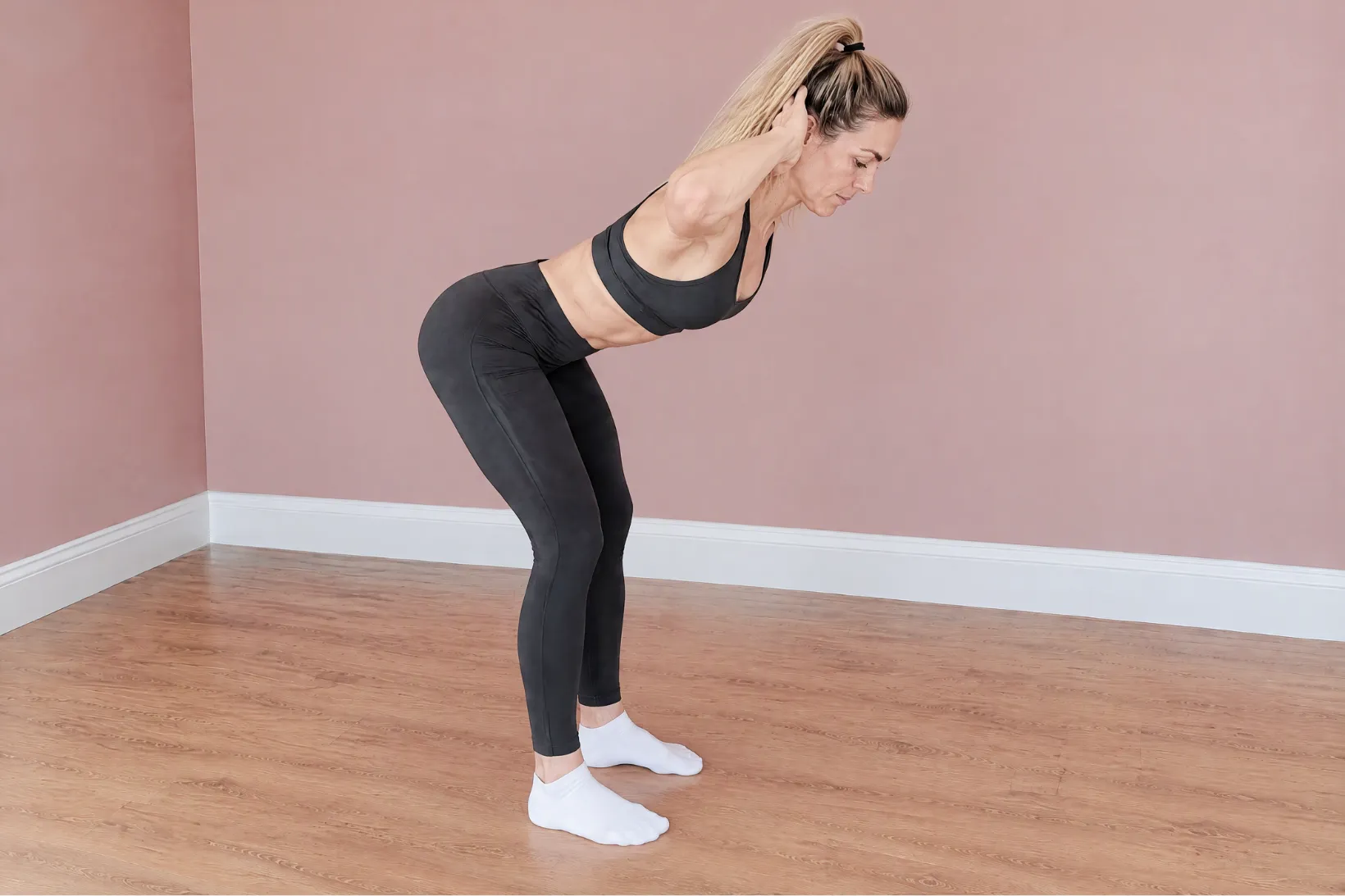
- Set your feet: feet about hip-width apart, bar over the middle of your feet.
- Hinge and grip: push your hips back, bend your knees, and grip just outside your legs.
- Brace: take a big breath into your belly, tighten your stomach and keep your back flat.
- Push the floor away: keep the bar close to your legs and stand up tall, squeezing your glutes.
- Lower with control: push your hips back and lower the bar down the same path.
The mistake I see most often is rounding the back. It usually means the weight is too heavy. Drop it a little (your ego will survive) and rebuild.
Two more to watch for:
- Bar drifting away from your legs: it puts far more strain on your lower back. Keep it brushing your legs.
- Jerking the bar off the floor: squeeze the slack out first, then push.
My rules for adding weight:
- Every rep looks the same: add weight only when every rep of every set looks like the first one.
- Small jumps: add 5 to 10 lb (2.5 to 5 kg) at a time, or add a rep or two first.
- Confidence counts: if you're not sure, repeat the weight next session. There's no prize for rushing.
Tip: Film one set from the side on your phone every few weeks. A rounded back rarely feels rounded from the inside.
Is deadlifting safe after 50?
Usually it's not my client asking this. It's a friend or partner who has helpfully wondered, "Is that safe at your age?"
The research is on your side. The NSCA's position statement on resistance training for older adults says properly taught strength training is safe and effective, and most injuries happen in inexperienced lifters.
The LIFTMOR trial studied 101 postmenopausal women, average age 65, all with low bone density. After a first month of bodyweight and light versions, the lifting group built up to deadlifts, squats and overhead presses at over 80% of their max, twice a week.
After 8 months, they had better bone density at the hip and spine, better physical function and stronger backs, with only one minor issue reported (a back spasm).
Now the catch, because there always is one. Those women were screened first and closely supervised. Heavy lifting was the destination, not day one.
Check with a doctor or physical therapist first if any of these apply:
- Osteoporosis: especially if you've had a spine fracture. Work with a physical therapist or qualified trainer before lifting heavy.
- Back problems: back pain, a recent back injury, a hernia or recent surgery.
- Blood pressure or heart conditions: heavy lifts and breath holding raise blood pressure.
And sharp pain during a lift (not muscle effort) means stop.
You don't have to deadlift
I love the deadlift. But it isn't compulsory, and I'd never make a client do it just because a chart says so.
Here's what it's actually for: training your hip hinge, the movement you use to pick anything up off the floor. It strengthens your glutes, hamstrings, back muscles and grip all at once, and it loads your bones. That's the goal. The deadlift is just one way to get there.
Some women find it awkward, particularly tall, long-legged builds like mine. Others have a back history or simply don't enjoy it. Some of my clients never deadlift at all, and they're still seriously strong.
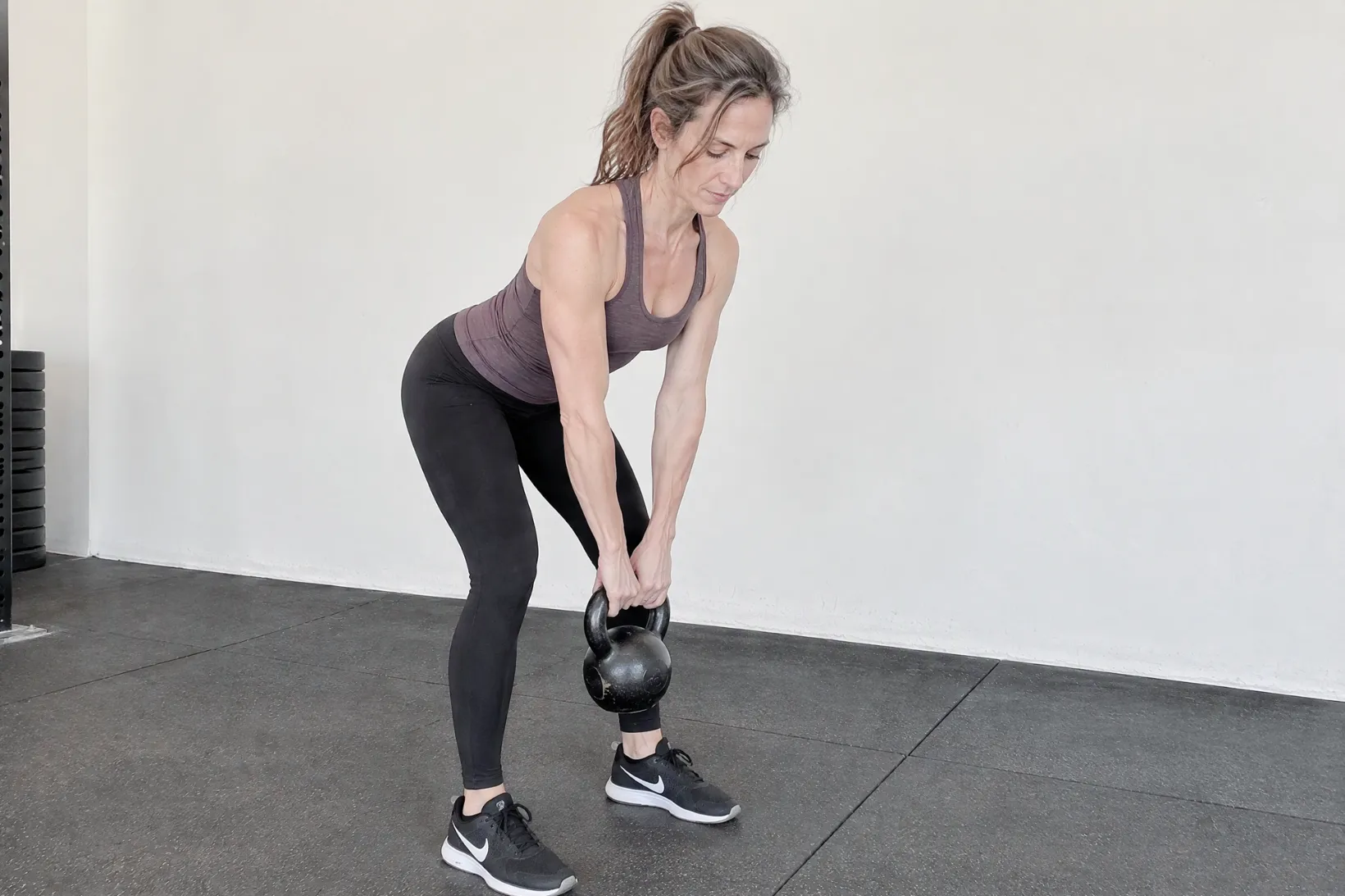
First, try an easier version:
- Trap bar deadlift: you stand inside a hexagon-shaped bar, which keeps you more upright and puts slightly less load on your lower back.
- Kettlebell deadlift: start around 18 to 26 lb (8 to 12 kg).
- Deadlift from blocks: raising the bar shortens the range, which helps tall lifters and stiff hips.
- Romanian deadlift: starts from standing, so you only lower as far as your hamstrings allow.
Or train the same muscles in other ways:
| Exercise | Main muscles | Why it's useful |
|---|---|---|
| Hip thrust or glute bridge | Glutes, hamstrings | Heavy glute work with little lower-back load |
| Back extension (45° bench) | Lower back, glutes, hamstrings | Strengthens the muscles that hold your posture |
| Cable pull-through | Glutes, hamstrings | Teaches the hinge with a light, smooth load |
| Kettlebell swing | Glutes, hamstrings, back | Builds power once your hinge is solid |
| Single-leg Romanian deadlift | Glutes, hamstrings, balance | Lighter weights plus balance practice |
| Lying leg curl | Hamstrings | Simple machine option |
| Farmer's carry | Grip, upper back, core | Builds grip and posture |
One small study found the Romanian deadlift and hip thrust worked the hip muscles about equally, so you're not missing out there.
The honest catch... no single alternative trains the whole chain from heels to upper back quite like a deadlift, and the LIFTMOR bone results came from heavy lifting plus impact work. If bone health is high on your list, a trap bar deadlift or squat is worth keeping. For your strengthspan, the best exercise is the one you'll keep doing for years.
A 12-week plan to move up a level
Knowing your level is nice. Moving up one is better. Here's a simple plan that works for most women.
Deadlift (or your chosen alternative) twice a week, with at least two days between sessions. Rest 2 to 3 minutes between sets.
| Weeks | Sets × reps | How it should feel |
|---|---|---|
| 1 to 4 | 2 × 10 | Easy to moderate, about 3 reps left |
| 5 to 8 | 3 × 8 | Moderate, about 2 reps left |
| 9 to 12 | 3 × 6 | Challenging, about 1 to 2 reps left |
- Earn the weight: add weight only when every rep looks the same.
- Rough days: after bad sleep or a night of hot flashes, drop the weight by about 10%. A lighter session still counts.
- Check in: in week 12, estimate your max from a good set and find your level again.
Most beginners notice clear strength gains within 8 to 12 weeks. Moving from beginner to intermediate usually takes many months. I wish I could tell you it's quicker, but I'd rather be honest.
FAQs
What is a good deadlift for a woman over 50?
Around 90% of your bodyweight is a strong, realistic target in your 50s. For a 150 lb woman that's about 135 lb (61 kg). Half of that is a great first milestone.
Is it too late to start deadlifting at 60 or 70?
No. The women in the LIFTMOR trial averaged 65 and built up to heavy lifts with good coaching. Start with a light kettlebell or trap bar and let your form lead.
Do I need a lifting belt?
Not as a beginner. Learn to brace with your own breath and stomach muscles first. A belt can help later, but it's an extra, not a requirement.
Wherever you are today, the number to beat is your own. Lift well, add weight slowly, and check in again in 12 weeks.